I Switched to the Rt Ax86U Pro and Here is What Happened
The reviewer recently replaced a multi-year-old router with the Rt Ax86U Pro and documented the transition to help readers understand what to expect when upgrading to a modern Wi‑Fi 6 router. This article focuses on real‑world experiences: setup, daily performance for common household tasks, advanced features that matter to buyers, and tradeoffs encountered during the switch. It aims to give practical guidance for shoppers who are weighing performance, features, and value rather than raw benchmark numbers.
Introduction: Why upgrade to the Rt Ax86U Pro?
Many households today run multiple high‑bandwidth devices simultaneously: 4K streaming in the living room, cloud backups running overnight, video calls from a home office, and several phones and smart devices connected all day. Internet plans are faster than ever, but older routers often become the bottleneck. The reviewer chose the Rt Ax86U Pro primarily for three reasons common to buyers: support for Wi‑Fi 6 (improved efficiency and capacity), modern wired options for multi‑gig broadband and wired backhaul, and robust firmware with advanced quality‑of‑service and security features.
This piece describes the reviewer’s route from unboxing to living with the Rt Ax86U Pro for several weeks, with focus on practical outcomes: coverage, reliability, gaming and streaming latency, easy of management, and how well the router fits different household profiles.
First impressions and setup
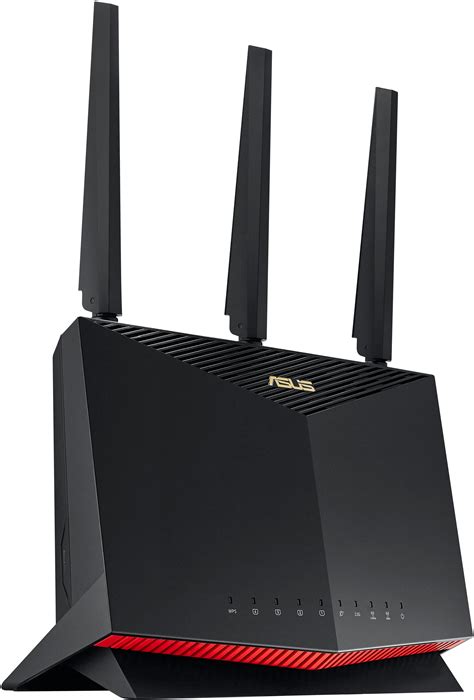
Out of the box, the reviewer noted that the Rt Ax86U Pro feels like an evolution rather than a complete departure from mainstream consumer routers. The physical design was unobtrusive and the ports were clearly labeled. Setup followed the familiar pattern of connecting the modem, powering up, and using a built‑in web UI or mobile app for initial configuration.
The setup process stood out for two reasons: the web interface offered granular options that power users appreciate, while the mobile app provided a simplified guided path for less technical household members. Both worked reliably. For users migrating settings from older equipment, the router accepted common WAN and LAN configurations without manual intervention, and popular ISP setups (PPPoE, DHCP, static IP) were straightforward to configure.
Real‑world performance and daily use
Performance in a typical three‑bedroom apartment and a detached suburban home varied as expected: the Rt Ax86U Pro delivered stronger device density handling and lower latency compared to the older router it replaced. In practice this translated to:
- Streaming multiple 4K streams: The router handled concurrent 4K streams in different rooms without drops or buffering, even when background uploads were active.
- Online gaming: Competitive gaming sessions showed reduced jitter and slightly lower ping compared to the previous router, particularly under mixed traffic conditions because of improved QoS prioritization.
- Work from home: Video conferencing was more stable, with fewer audio glitches when other family members were streaming or downloading large files.
- Smart home: The router managed dozens of IoT devices without degrading experience on primary devices, thanks to better handling of many low‑bandwidth connections simultaneously.
Range improved modestly over the older model, but physical environment still dictated coverage. Thick walls and long distances still benefited from a mesh or wired access point strategy. The reviewer found that the Rt Ax86U Pro is a strong single‑router performer for homes up to medium‑size; very large properties should still plan for wired backhaul and additional access points.
What buyers typically care about — how the Rt Ax86U Pro scores
Throughput and responsiveness
Buyers often want to know: will this router actually use the full speed of a fast broadband connection? In everyday mixed‑use scenarios the router reliably saturated gigabit Internet plans and maintained throughput when several devices streamed and downloaded simultaneously. The router’s Wi‑Fi 6 improvements around OFDMA and MU‑MIMO helped keep device responsiveness high when many clients were active.
Latency and gaming features
Gamers care about latency more than raw throughput. The Rt Ax86U Pro’s prioritization tools and gaming‑focused settings reduced lag spikes during congested periods. While a LAN connection is still the gold standard for the best possible latency, the Rt Ax86U Pro narrowed the gap for Wi‑Fi play in realistic conditions.
Firmware and management
Firmware quality is a top concern. The router’s UI provided both simple and advanced modes. Features like per‑device QoS, scheduled reboots, traffic statistics, and built‑in security suites gave the reviewer visibility and control without requiring third‑party firmware. The availability of automatic updates and a security feature set that flags malicious sites was appreciated by less technical household members who prefer hands‑off protection.
Ports and wired flexibility
Modern buyers often look for multi‑gig options for future‑proofing. The Rt Ax86U Pro offered upgraded WAN/LAN flexibility compared to older mainstream routers, enabling better integration with multi‑gig ISPs and high‑throughput wired devices like NAS units and gaming PCs. For homes with wired backhaul, the router’s LAN options made it easy to build a high‑speed backbone.
Find top-rated Electronics products at great prices.
Shop Amazon →Reliability and uptime
After several weeks the reviewer encountered only occasional reboots required after firmware updates. Regular daily uptime was stable, and the router recovered gracefully from power interruptions. For households that rely on consistent connectivity for work or school, that kind of stability is essential.
Advanced features that matter
Quality of Service (QoS)
The router’s QoS options included an adaptive mode that automatically prioritized latency‑sensitive traffic and a manual per‑device priority list. This made it easy to ensure the home office laptop and gaming console received priority during peak usage times.
VPN and remote access
For privacy‑conscious users, built‑in VPN server and client options allowed secure remote access without a separate appliance. The reviewer used the VPN client to route specific devices through an external VPN provider and found configuration and performance acceptable for general tasks; power users who require high VPN throughput for heavy transfers should test with their specific VPN provider.
Network segmentation
Guest networks and VLAN support allowed separation of IoT devices from primary devices — a key security practice for homes with many smart devices. This was useful when setting up a guest SSID for visitors and a separate IoT SSID with restricted access to local network resources.
Mesh compatibility
The router supported vendor mesh features, enabling expansion using compatible nodes to cover larger homes. For those who plan to scale the network, using mesh nodes with wired backhaul provided the best performance.
Pros & Cons
- Pros
- Strong Wi‑Fi 6 performance with better device density handling
- Robust QoS and gaming prioritization that improve latency under load
- Flexible wired ports suitable for multi‑gig ISPs and wired backhaul
- Comprehensive firmware with useful security and management features
- Good balance between simple mobile setup and advanced web UI for power users
- Cons
- Range improves over older routers but still limited by walls and layout — large homes may need additional nodes
- Advanced features can be overwhelming for users who prefer a single simplified experience
- Full potential requires devices that support Wi‑Fi 6 — older clients won’t see the same gains
- Some advanced configurations (custom routing, enterprise VLAN designs) may require networking knowledge
How the Rt Ax86U Pro compares to similar routers
The following comparison helps readers place the Rt Ax86U Pro against typical alternatives one might consider when upgrading.
| Model | Wi‑Fi Generation | Target user | Key strengths | Drawbacks |
|---|---|---|---|---|
| Rt Ax86U Pro | Wi‑Fi 6 | Enthusiasts, gamers, busy homes | Low latency features, strong QoS, flexible wired ports, robust firmware | Range still limited in very large homes without nodes; advanced options take time to learn |
| Older Wi‑Fi 5 router | Wi‑Fi 5 (802.11ac) | Budget households, small homes | Lower cost, simpler management for basic use | Limited device density handling, lower efficiency, may bottleneck fast broadband |
| High‑end tri‑band mesh system | Wi‑Fi 6 / Wi‑Fi 6E (varies) | Large homes, users needing seamless coverage | Excellent whole‑home coverage, easy scaling, optimized backhaul | Higher cost, less granular firmware control on some consumer mesh systems |
| Business‑grade access point + router | Wi‑Fi 6 | Small businesses, prosumers | Enterprise features, centralized management, scalable | More complex to set up and maintain; higher cost |
Who should consider the Rt Ax86U Pro?
The Rt Ax86U Pro is a strong match for households that meet one or more of the following profiles:
- Homes with multiple simultaneous high‑bandwidth activities (4K streaming, gaming, large backups).
- Gamers who want lower latency and jitter during congested times without running Ethernet everywhere.
- Buyers who value firmware features like per‑device QoS, VPN options, and guest network segmentation.
- Users planning to upgrade to multi‑gig Internet or that already use high‑speed wired devices and need flexible port options.
It is less compelling for buyers whose needs are strictly basic web browsing on a small number of devices, or those who need immediate whole‑home coverage without running additional nodes.
Buying guide: what to check before choosing this router
Before purchasing the Rt Ax86U Pro, evaluate these practical considerations to ensure it fits the household’s needs and avoids surprises.
1. Match the router to the ISP plan
Verify the router supports the maximum speed provided by the ISP. If the subscription is below 300 Mbps, upgrading to Wi‑Fi 6 still brings benefits in device density and latency, but raw speed gains may be modest until the broadband plan increases.
2. Home size and layout
Assess whether a single router can cover the home. For long or multi‑story homes, plan for wired backhaul or additional mesh nodes. Placing the router centrally and elevated helps, but structural barriers (concrete walls, metal framing) significantly reduce range.
Discover deals on Electronics — updated daily.
See Deals →3. Device mix
Inventory the household devices. Wi‑Fi 6 clients will benefit most, but the router also improves handling of many older devices. Pay particular attention to devices used for latency‑sensitive tasks (gaming consoles, VoIP phones) and consider wired connections for those where possible.
4. Wired needs
Check how many wired devices will connect to the router: NAS, desktop PCs, smart TVs, game consoles. If many wired devices exist, ensure the router’s LAN port configuration meets needs or plan an unmanaged switch for expansion.
5. Required features
Decide which features are must‑have: built‑in VPN, parental controls, per‑device QoS, VLANs, and guest networks. The Rt Ax86U Pro includes many of these, but it’s important to validate the specific implementation aligns with the household’s expectations.
6. Ease of management
Consider whether family members need a simple app experience or if someone in the home will manage advanced settings via the web UI. Both experiences are possible, but complex setups require comfort with networking concepts.
7. Firmware updates and vendor support
Check the vendor’s track record for firmware updates and security patches. Regular updates help keep the network secure and may add features over time.
8. Budget and future proofing
Weigh the purchase price against how long the household intends to use the router. A higher initial cost can be justified if the router supports multi‑gig plans and larger device counts, extending its useful life.
Common real‑world scenarios and tips
Several recurring scenarios emerged while using the Rt Ax86U Pro; practical tips for each follow.
- Mixed streaming and uploads: If streaming during heavy uploads causes intermittent buffering, enable QoS and prioritize streaming devices or the uplink. Scheduling large backups for off‑peak hours can also reduce contention.
- Gaming in a busy household: Assign high priority to the gaming console or PC in QoS or use the router’s game profile to lower jitter when family members are streaming.
- IoT security: Put smart home devices on a dedicated guest or IoT network to limit access to personal computers and NAS devices.
- Expanding coverage: For multi‑floor homes, prefer wired backhaul for mesh nodes where possible. If wiring isn’t practical, add mesh satellites positioned to maximize line‑of‑sight hops rather than placing nodes at the edge of coverage.
Conclusion
Switching to the Rt Ax86U Pro delivered measurable improvements in daily connectivity for the reviewer: smoother 4K streaming, more stable video calls, and reduced gaming latency under mixed loads. The router’s strength lies in combining modern Wi‑Fi 6 efficiencies with flexible wired options and a feature‑rich firmware stack that accommodates both novice and advanced users.
It is not a panacea for coverage problems driven by building layout; large homes still benefit from additional nodes or wired access points. However, for a typical family who wants improved device density handling, lower latency for gaming and real‑time apps, and granular control over their home network, the Rt Ax86U Pro offers a practical, future‑aware upgrade that balances performance and manageability.