Pulsefire Haste 2 Honest Review — Is the Hype Justified?
Introduction
I've been using the Pulsefire Haste 2 every day for the past five months. I bought it because I wanted a lightweight, responsive mouse that could handle long hours of work and intense gaming sessions without causing fatigue. The first-generation Haste impressed many people, and the Haste 2 promised refinements — a lighter shell, improved feet, and better overall reliability. After months of real-world use, practice, and some inevitable frustration, I wanted to share a candid, detailed take on whether the hype around the Haste 2 is actually justified.
What I bought and why
For clarity: I purchased the wireless Pulsefire Haste 2 (not the wired-only model) because I was curious whether HyperX had finally delivered a wireless lightweight that felt indistinguishable from its wired counterparts. I primarily use a palm-to-claw hybrid grip, split time between competitive shooters and productivity work (spreadsheets, long writing sessions, and some photo editing). My expectations were simple: low latency, comfortable ergonomics, long battery life, and durable build despite the ultra-light shell.
Design and build quality
Right away, the Haste 2 gives you the impression of being engineered for minimal weight. The honeycomb shell is even more open than many other lightweight mice I've tried, and that contributes to the featherlight feel. In my experience, the shell strikes a good compromise between weight reduction and rigidity — it doesn't creak under normal grip pressure, though you can hear a soft flex if you squeeze the sides intentionally. One thing I appreciated: the finish is matte enough that sweat isn't an obvious issue after long sessions, unlike some glossy shells that feel sticky.
The buttons have a short, crisp travel and a satisfying audible click without feeling mushy. The primary buttons are slightly concave which helped keep my finger centered during flicks and quick corrections. My unit arrived with well-aligned seams and no visible paint or molding defects, which I know can vary unit to unit. The build feels higher-end than some ultra-cheap honeycomb mice, but it’s still a trade-off: you get lightness at the expense of a feeling of solidity compared to heavier, more premium shells.
Feet and glide
Glide is a major reason I stuck with this mouse. The stock skates are large and very slippery — they let the Haste 2 slide effortlessly across cloth and hard pads alike. I noticed an immediate difference switching from my older mouse: less effort required for fine micro-adjustments, which reduced wrist strain during long aim training sessions. Over months of use the PTFE feet did wear slightly, but not dramatically; replacement skates or a modest upgrade are an easy fix if you’re obsessive about maintaining the absolute best glide.
Performance and sensor behavior
In daily use, the Haste 2 felt responsive and snappy. Cursor tracking was precise for routine tasks and aiming in games; I didn't notice any meaningful jitter, angle-snapping, or sensor prediction at the speeds I used most. For competitive play, it translated to consistent flicks and controlled sprays in games like Valorant and Apex Legends. My subjective latency comparisons against a wired mouse showed no surprising lag — in fact, in most short test sessions I couldn't tell the difference.
There were a couple of edge cases worth mentioning. At extremely slow, minute adjustments while doing pixel-level work in photo editing, I occasionally noticed the sensor smoothing a touch more than my heavier, premium office mouse. That said, it wasn't a deal-breaker for me — just something that became noticeable if I forced the test conditions. In typical use, and especially in gaming, the Haste 2's performance stayed confidently consistent.
Battery life and connectivity
I used the mouse primarily in wireless mode with Bluetooth and the included USB receiver. Battery life in my usage pattern (several hours per day with frequent gaming sessions) lasted multiple days between charges — usually around three to four days of mixed use before I had to plug it in. When I needed to recharge, the wired passthrough felt fine; it charges reasonably quickly and the cable is flexible enough to be used as a direct wired connection without much drag.
Connectivity was rock-solid for most of my time with the mouse. I did experience one brief dropout during a long streaming session, which may have been caused by environmental RF noise in my setup rather than the mouse itself; after re-pairing it was fine. If you're in a crowded wireless environment, it's worth testing on your rig before relying on it for tournament play. For my setup, the receiver offered consistently low-latency performance and reliable tracking.
Looking for the best Electronics deals on Amazon?
Browse Now →Comfort and ergonomics
Comfort is where the Haste 2 mostly shines for me. Despite being light, it still supports a relaxed palm placement for long sessions. The sides have just enough texture to prevent slipping without being abrasive. Since I have a hybrid grip, I appreciated the balance: it wasn't too narrow for my palm, and the hump wasn't overly pronounced, so my hand didn't feel forced into an unnatural position.
That said, people with very large hands or those who prefer a full-palm grip might find it a touch small. I did have a few sessions where my ring and pinky fingers brushed the honeycomb openings and I noticed minor irritation after prolonged use — not enough to stop using the mouse, but worth noting if you have sensitive skin or very sweaty hands. A thin glove or tape on the shell can mitigate this if it bothers you.
Software and customization
I used the manufacturer’s software to tweak DPI, polling rate, and to create a couple of lighting and button profiles. The software is serviceable: it gets the job done without being overwhelming. I was pleased with how easy it was to save profiles to the mouse's onboard memory so I could switch rigs without reconfiguring everything.
My criticism here is that deep customization is somewhat limited compared to enthusiast software ecosystems from other brands. If you like granular button macros or complex lighting sequences, you might feel constrained. For my needs — DPI stages, simple macros, and profile switching — it was perfectly fine.
Durability and long-term notes
After five months, the mouse shows light signs of wear: slightly dulled PTFE feet, faint rub marks on the underside, and a tiny bit of grime in the honeycomb cutouts. None of it affects performance. The primary buttons still feel clicky and reliable, and the scroll wheel's tactile steps remain consistent. I did notice that dust accumulates inside the honeycomb more than with closed-shell mice, but a quick burst of compressed air or gentle brushing keeps it tidy.
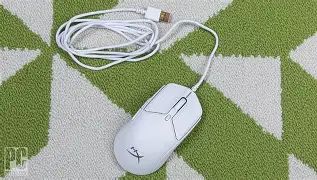
One thing that bothered me during extended use was the accumulation of oil around the edges of the shell where my hand rests; this is a cosmetic issue but it made me reach for a microfiber cloth more often than I'd like. Functionally, though, the mouse has held up well and I don't have any mechanical failures to report.
Pros & Cons
- Pros:
- Very lightweight — reduces fatigue during long sessions.
- Excellent glide thanks to large PTFE feet.
- Responsive sensor and low perceived latency in wireless mode.
- Comfortable shape for hybrid grips.
- Onboard memory for profiles; software is straightforward.
- Cons:
- Honeycomb shell gathers dust and oil more than closed designs.
- May feel slightly small for very large hands or full-palm users.
- Customization options are somewhat basic compared to some competitors.
- Minor flex under aggressive squeezing; not inherently concerning but noticeable.
How it compares — quick comparison table
| Feature | Pulsefire Haste 2 | Pulsefire Haste (original) | Model O / G Pro X-type (typical competitor) |
|---|---|---|---|
| General feel | Ultra-light, slightly stiffer shell than some honeycombs | Very light, slightly more flexible shell | Ultra-light, often smoother shell finish |
| Glide | Excellent out of the box; slippery PTFE feet | Good, but slightly more drag initially | Top-tier glide with polished skates |
| Wireless performance | Reliable; near-wired feel in my testing | Mostly wired-focused models | Varies by model; flagship options often excel |
| Comfort for hybrid grip | Very good | Good | Depends on model; many suit claw/palm equally well |
| Maintenance | Higher (dust in honeycomb) | Higher | Lower for closed shells, higher for honeycomb |
Buying guide — who should consider the Haste 2?
If you’re trying to decide whether the Haste 2 is right for you, here are the key points I used to weigh my purchase and you should too.
1. You want an ultra-light mouse to reduce fatigue
In my experience, the Haste 2 does exactly what lightweight mice promise: it feels effortless to flick and requires less wrist energy during extended sessions. If you find heavier mice tiring during long play or work, the Haste 2 is a good candidate.
2. You prioritize glide and low effort
The stock skates are very good. If you value effortless tracking and low friction, this mouse will likely make that first impression you enjoy for weeks.
Looking for the best Electronics deals on Amazon?
Shop Amazon →3. You need wireless but don’t want visible latency
For me, the wireless implementation has been reliable and responsive. If you need a wireless mouse for both gaming and productivity and have had bad experiences with lag before, the Haste 2 is worth testing on your setup.
4. You don’t mind a little extra maintenance
If you value a perfectly clean-looking mouse and dislike dust or oil buildup, be prepared to clean the shell periodically. The open-honeycomb design traps grit more than closed shells.
5. Hand size and grip considerations
Try it if possible. If your hands are very large and you prefer to rest your palm fully on the mouse, you might prefer a slightly bulkier option. If you use a claw or fingertip grip, or a hybrid like me, the Haste 2 will probably fit well.
6. Software and advanced customization
If you rely on advanced macros or a deep ecosystem for lighting and scripting, consider whether the Haste 2’s software covers your needs — it’s simple and effective, but not the most feature-rich in the market.
Final impressions and conclusion
After using the Pulsefire Haste 2 daily for months, I'm convinced it's more than just hype for a wide range of users. What I found was a mouse that feels deliberately tuned for speed, low fatigue, and reliable wireless performance. My favorite parts are the effortless glide and the way the mouse disappears in my hand during intense play — it lets me focus on aim rather than compensating for weight or resistance.
On the downside, the honeycomb shell means more maintenance, and the size might not be ideal for very large-handed users. The software is fine but unremarkable, and while the build quality is better than many low-cost honeycomb mice, it still doesn't match the solidity of heavier, premium-feeling mice.
In my experience, if you want a lightweight wireless mouse that performs reliably, feels comfortable for hybrid grips, and delivers excellent glide, the Pulsefire Haste 2 is a very strong choice. If you prioritize ultra-slick customization, a closed-shell aesthetic, or have very large hands, you might want to test alternatives first. Overall, the Haste 2 justified the hype for me — it delivered the lightness and responsiveness it promised, and it became my daily driver for both work and play.