Should You Buy the A20 Wireless in 2026? A Deep Dive
After using the A20 Wireless for several months as my regular gaming headset, I came away with a more nuanced opinion than I expected. When I first bought it, I was looking for something simple: a wireless headset that would be comfortable for long sessions, easy to live with, and good enough across gaming, voice chat, and casual media. What I found was a headset that gets a lot right in practical day-to-day use, but also shows its age in ways that are harder to ignore in 2026.
If you are considering the A20 Wireless today, I do not think the decision comes down to whether it is good or bad. In my experience, it is more about whether its strengths line up with the way you actually play. I appreciated the comfort, the dependable wireless connection, and the uncomplicated setup. At the same time, I noticed some limitations in sound detail, controls, and overall value compared with newer wireless headsets that have become more competitive over the last few years.
In this review, I am going to break down what it was like to actually own the A20 Wireless over an extended period, where it still makes sense in 2026, and where I think buyers should be careful before spending their money.
My Experience Using the A20 Wireless for Several Months
I have been using this headset for long multiplayer sessions, single-player gaming, Discord calls, some TV watching, and even a bit of late-night music listening at my desk. That mix gave me a pretty realistic picture of what the A20 Wireless is good at and where it feels less impressive.
The first thing I appreciated was just how easy it was to start using. I did not have to wrestle with complicated pairing steps every time I switched devices. Once it was set up, the headset mostly stayed out of my way, and I mean that as a compliment. A lot of wireless gear sounds great on paper but becomes annoying in everyday use because of random disconnects, confusing software, or awkward charging habits. The A20 Wireless, in my experience, was refreshingly straightforward.
I was also surprised by how comfortable it felt during long sessions. I have worn plenty of headsets that seem fine for the first 30 minutes and then slowly become irritating. With the A20 Wireless, the clamping force felt manageable, the ear cushions stayed reasonably comfortable, and the headset never gave me that “I need to take this off immediately” feeling after a long evening. That is one of the biggest reasons I kept using it longer than I originally expected.
That said, after testing for several months, I also started noticing the compromises more clearly. The audio quality is competent, but it did not impress me in the way some newer wireless models do. The sound profile felt more functional than exciting. In competitive games, I could still pick up positional cues well enough, but in cinematic games or music, I often wanted a little more detail, texture, and separation. It is not bad audio by any means, but in 2026 it no longer feels especially strong for the price category it usually occupies.
Design, Build, and Long-Term Comfort
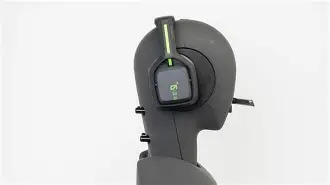
From a design standpoint, the A20 Wireless feels practical rather than premium. That was obvious to me from day one, but it mattered more after living with it for a while. The plastic-heavy build helps keep the headset relatively light, which absolutely helps comfort, but it also means the overall feel is more utilitarian than luxurious.
In my experience, that tradeoff mostly works. I would rather have a headset that stays comfortable than one that looks expensive but becomes a burden on my head after an hour. The A20 Wireless has a kind of “tool, not jewelry” design philosophy. It is built to be used, not admired. I actually grew to appreciate that.
The headband and ear pads held up reasonably well over time in my use, though I did notice that the materials do not feel especially plush compared with some newer alternatives. One thing that bothered me was that the fit, while comfortable, never felt especially snug or refined. It sat securely enough, but I always had a slight awareness that I was wearing a midrange gaming headset rather than something more premium and carefully finished.
If you wear glasses, this may still be a decent option. I noticed less pressure around the temples than with some tighter headsets I have tried. That does not mean it disappears on your head, but it stayed more tolerable than many competitors during long sessions.
Sound Quality in 2026: Still Good Enough?
This is the section that will likely decide the purchase for a lot of people. The A20 Wireless sounds fine, and for some buyers that may genuinely be enough. But after months of switching between this headset and newer models, I came to feel that “fine” is the best word for it.
For gaming, the tuning works fairly well. Dialogue is clear enough, explosions have some impact, and directional cues are present enough to stay useful in shooters and online games. I never felt lost because of the headset. Footsteps, reloads, and environmental audio were there when I needed them. If your main goal is to hear what matters in gameplay and chat with friends without frustration, the A20 Wireless still does the job.
Where I found it less convincing was in nuance. In story-driven games with lush soundtracks and dense audio design, it did not pull me in as much as I wanted. There was a slight flattening effect to the sound. Richer scenes felt less layered, and quieter details did not always stand out the way they do on more capable headsets. I noticed that especially when playing games with atmospheric ambient sound or orchestral scores. The A20 Wireless delivered the essentials, but not much extra.
Find top-rated Audio & Headphones products at great prices.
See Deals →For music, my experience was similar. Vocals came through cleanly enough, and bass was present without turning everything muddy, but the presentation felt more serviceable than engaging. I would not call this a headset for people who care deeply about musical detail. It works for background listening, but I would not buy it primarily for that purpose.
For movies and streaming, it landed somewhere in the middle. Voices were easy to follow, and the general listening experience was pleasant enough, but I never got that cinematic spaciousness I was hoping for. In 2026, when buyers can choose from more refined wireless audio products, this matters more than it used to.
Microphone Performance
The microphone was one of the more practical parts of the experience for me. Friends consistently said my voice came through clearly enough in party chat and Discord, and I rarely had to repeat myself. I appreciated that the mic felt dependable rather than flashy. It was not the kind of microphone that made people ask what I was using, but it also was not the kind that caused complaints.
I found the mic especially good in the context it was designed for: gaming communication. Callouts, casual conversation, and general voice chat all worked well. It handled everyday use without drama.
Still, I would not use it for professional voice recording, streaming where audio quality is a major priority, or any content creation that depends on a polished vocal sound. In my experience, it is perfectly competent, but not remarkable. That describes a lot of the A20 Wireless overall.
Wireless Stability, Battery Life, and Daily Usability
This is where the A20 Wireless earned a lot of goodwill from me. I have a low tolerance for wireless devices that feel unpredictable, and this headset was mostly reliable. I did not run into frequent dropouts or irritating connection behavior during normal use. That kind of consistency matters more than spec-sheet bragging, especially if you use your headset almost every day.
Battery life also felt solid enough for real-world use. I was not constantly worrying about charging it, and that made the headset easier to live with. After testing for months, I came to value that practical convenience more than any single audio feature. A headset can sound slightly better on paper, but if it is annoying to keep charged or reconnect, I lose patience quickly.
One thing I noticed, though, is that usability features on the A20 Wireless feel a bit less polished by 2026 standards. The controls are workable, but not especially elegant. There is a certain trial-and-error feeling to getting fully comfortable with them at first. Once I adapted, it was fine, but I never found the interface especially intuitive or satisfying.
That is really the recurring theme here: it works, but it rarely delights.
Pros and Cons
What I Liked
- Comfort over long sessions: I could wear it for hours without major fatigue, which ended up being one of its biggest strengths.
- Reliable wireless connection: In my experience, it stayed stable and avoided the random connection annoyances that ruin some wireless headsets.
- Simple setup: I appreciated how quickly I could get into a game instead of fiddling with settings.
- Clear enough microphone for gaming: Voice chat worked well and friends had no trouble understanding me.
- Functional sound for gaming: It handled gameplay audio competently, especially for general multiplayer use.
What Disappointed Me
- Audio lacks refinement: I wanted more detail, separation, and energy, especially for music and cinematic games.
- Build feels midrange: It is light and practical, but it does not feel especially premium in the hand.
- Controls are just okay: They are usable, but I never found them especially smooth or satisfying.
- Value is harder to justify in 2026: Newer competitors often offer more features or better sound in the same broad segment.
- Not a great all-purpose audio headset: It works best for gaming, but feels less compelling outside that role.
A20 Wireless vs. What Buyers Expect in 2026
When I first bought the A20 Wireless, it made sense as a straightforward gaming-first option. In 2026, though, buyer expectations have shifted. Wireless headsets are no longer judged only on whether they avoid obvious flaws. People now expect stronger app support, better tuning, improved microphones, more flexible connectivity, and a more premium feel even in the midrange.
That shift is why the A20 Wireless feels more situational now. If you can get it at a clearly lower price than newer alternatives, I think it can still make sense. But if it is priced too close to more modern options, I would hesitate. After using it for months, I do not think it has enough standout performance to justify paying a premium simply because it is familiar or recognizable.
| Category | A20 Wireless | What I Expect From a Strong 2026 Alternative |
|---|---|---|
| Comfort | Very good for long sessions | At least as good, sometimes with better materials |
| Sound Quality | Good enough for gaming, limited refinement | Better detail, cleaner imaging, fuller overall presentation |
| Microphone | Clear enough for chat | Clearer, fuller, and often better noise handling |
| Build Feel | Functional and lightweight | More premium materials or sturdier finish |
| Controls and Features | Serviceable | More polished controls and broader connectivity options |
| Value | Depends heavily on price | Usually stronger if priced similarly |
Who I Think Should Buy the A20 Wireless in 2026
After spending real time with it, I think the A20 Wireless is still worth considering for a specific kind of buyer.
I would recommend it to someone who mainly wants a comfortable wireless headset for gaming, values straightforward everyday reliability, and is buying at a discount. If you are not overly picky about music performance or premium materials, and you just want something that works consistently, I can see the appeal.
Discover deals on Audio & Headphones — updated daily.
Shop Amazon →I would also consider it for someone who prioritizes comfort over flashy features. That was honestly the reason I kept reaching for it. There are headsets that sound a little better but wear worse over time. The A20 Wireless does not win on excitement, but it does win some points for ease and comfort.
On the other hand, I would not recommend it to buyers looking for the best audio quality they can get for their money in 2026. I also would not recommend it to someone who wants one headset to handle gaming, music, movies, work calls, and mobile use equally well. In my experience, this is a gaming headset first, and a broader audio device second.
Buying Guide: What to Check Before You Buy
If you are still considering the A20 Wireless, here are the things I think matter most before making the purchase.
1. Compare the Price Against Newer Headsets
This is the biggest factor. I would only feel confident buying the A20 Wireless in 2026 if the price is meaningfully lower than newer competitors. If it costs close to a more recent headset with better sound and features, I do not think the value holds up.
2. Be Honest About Your Main Use Case
If your primary use is multiplayer gaming and voice chat, the A20 Wireless still makes more sense. If you care a lot about music fidelity, immersive single-player audio, or broader device flexibility, I think you should be more cautious.
3. Prioritize Comfort If You Play for Hours
One reason I appreciated this headset was how easy it was to wear for extended sessions. If comfort is one of your top priorities, this is still one of the more persuasive reasons to consider it.
4. Do Not Expect Premium Build Quality
I think it is important to go in with the right expectations. The A20 Wireless feels practical, not luxurious. If you want something that feels expensive in the hand, this probably will not scratch that itch.
5. Think About Longevity and Feature Set
In 2026, I would look carefully at whether you want features that the A20 Wireless may not deliver as well as newer models. Software polish, connectivity flexibility, and overall tuning matter more now than they did a few years ago. I noticed that the A20 Wireless still covers the basics well, but the category around it has moved forward.
My Final Verdict After Months of Use
After living with the A20 Wireless for several months, my honest take is that it is still a decent headset, but no longer an easy recommendation at full market value. I liked the comfort, I trusted the wireless performance, and I never found it frustrating in the ways some gaming headsets can be. Those are real strengths, and I do not want to undersell them.
But I also cannot ignore what stood out to me over time: the sound is merely good enough, the build is functional rather than impressive, and the overall package feels less competitive in 2026 than it once did. I was hoping it would age more gracefully, but in my experience it now makes the most sense only when the price is right and your priorities are very specific.
If you want a comfortable, dependable wireless gaming headset and can get the A20 Wireless for a good deal, I think it can still be worth buying. If you are paying anywhere near the price of stronger modern alternatives, I would keep looking. That is the clearest conclusion I came to after using it long enough for the honeymoon period to wear off.